A new purpose for what remains
A bowl on a lunch table begins with choices about material, shape and the meal it will serve. For bagasse tableware, the material story starts with sugarcane. After juice is extracted, the remaining fibre is called bagasse. Preparing and moulding that fibre gives an agricultural by-product another use.
GoEco's purpose is to help businesses in Thailand make practical choices in disposable tableware. The connection between plant material and everyday service is central to that work.
The journey from field to fibre
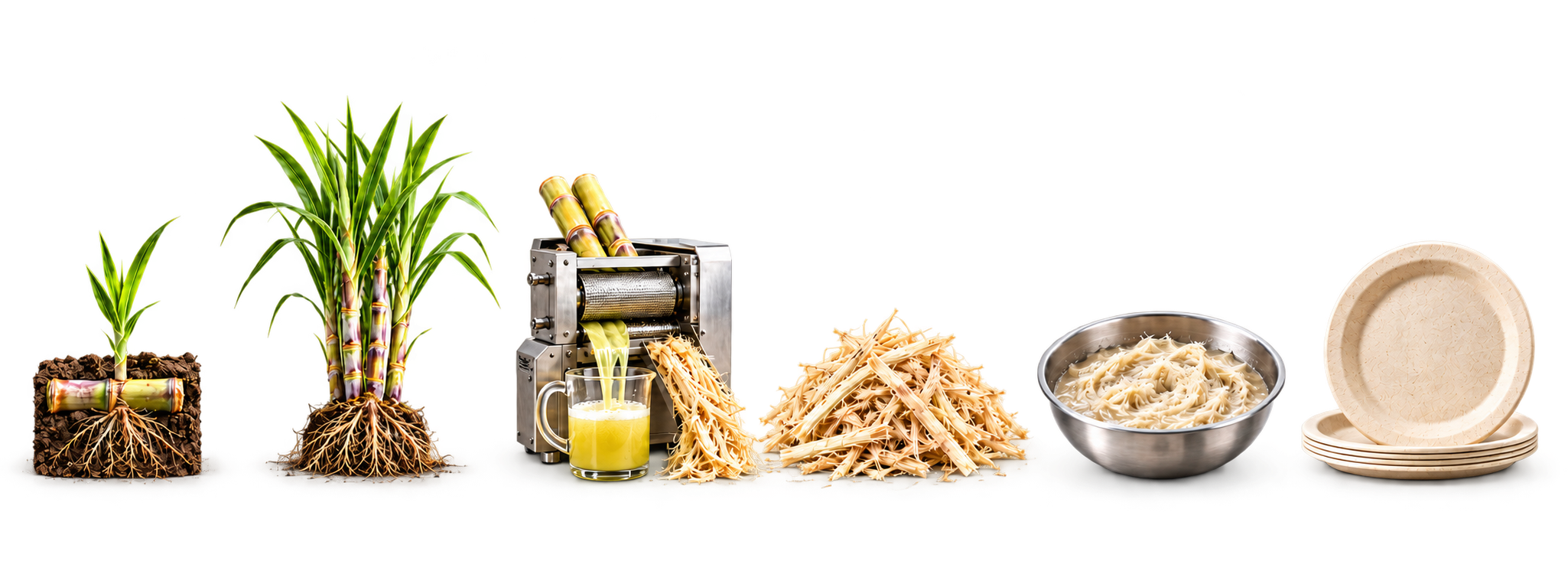
The general process begins when sugarcane stem cuttings take root and develop into tall stalks. After harvesting, the stalks are pressed to extract their juice. The remaining bagasse fibre is collected for further preparation.
These stages explain the origin of the material. The detailed sourcing route for a particular product depends on its supply chain and manufacturing partner; the journey shown here is an overview, rather than a record of an individual shipment.
Giving the fibre a useful shape
Recovered fibres are prepared as wet pulp. Moulding and drying then turn that pulp into forms such as bowls and plates. Shape matters: a bowl's width and depth, a plate's surface, or separate compartments all affect how food can be arranged.
The finished item therefore needs to be considered as a specific product. Its dimensions, pack format and applicable documentation help a buyer judge whether it belongs in their operation.
Where GoEco fits into the story
GoEco connects material selection, product development, manufacturing partners and distribution with the needs of businesses in Thailand. Our work includes GoEco-branded ranges and OEM or private-label programmes, bringing product and packaging choices to retail and foodservice channels.
The current online catalogue brings together bagasse bowls, plates and a burger box, alongside selected paper plates. Each category provides a starting point for comparing products. Retail availability varies by branch and range, so the next step is to confirm the item and purchasing route you need.
The final step is your meal
A material story becomes useful when it helps with a real decision. Explore the catalogue, identify the size and quantity your business requires, and tell us how you plan to use the product. We can discuss the relevant product information and documents, and you can ask about sample availability before deciding what to order.